
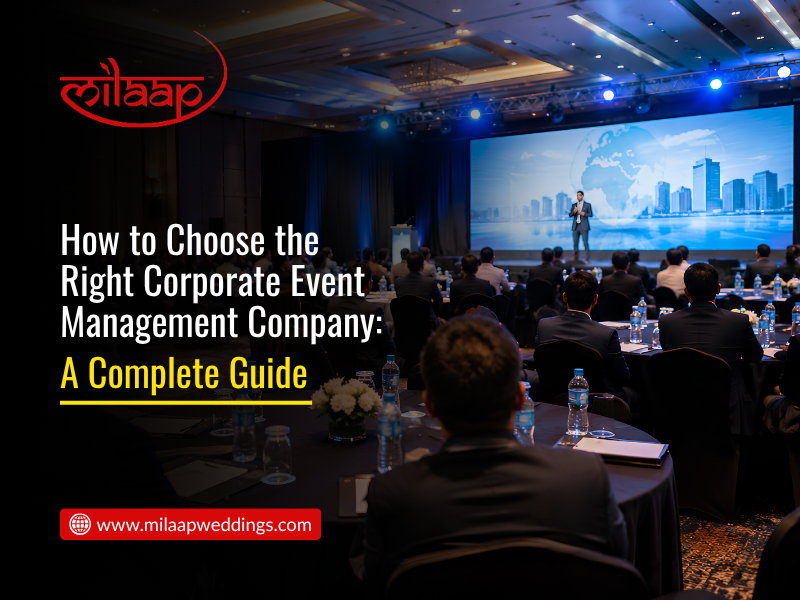
Planning a corporate event can be a major responsibility for a company. Whether it is an annual celebration, conference, product launch, dealer meet, employee gathering, awards ceremony, business summit, corporate retreat, or networking event, successful execution requires careful planning and professional coordination.
One of the most important decisions during the planning process is choosing the right corporate event management company.
The right event partner can help manage venues, vendors, technology, décor, entertainment, guest arrangements, logistics, timelines, and event-day execution.
But with so many event management companies available, another important question usually comes up:
How do you choose the right corporate event management company?
There is no single answer.
Every company has different requirements, budgets, audiences, objectives, and expectations.
A company planning a small employee gathering will have very different needs from an organisation arranging a large conference, product launch, or multi-day corporate event.
This is why choosing an event management company should not be based only on price, attractive photographs, or a presentation.
Instead, companies should evaluate experience, services, communication, creativity, technical capabilities, vendor network, budget management, execution process, and the company’s ability to understand the specific objectives of the event.

What Does a Corporate Event Management Company Do?
A corporate event management company helps plan, coordinate, and execute different aspects of a business event.
Depending on the event requirements, the company may handle:
- Event planning
- Venue selection
- Budget management
- Vendor coordination
- Décor and branding
- Audio-visual production
- Stage design
- Food and beverages
- Entertainment
- Guest management
- Transportation
- Accommodation
- Photography and videography
- Event staffing
- Registration
- Technical support
- On-site coordination
- Post-event activities
The exact services depend on the event and the agreement between the company and the event management team.
A good corporate event partner should be able to understand the overall requirement and coordinate different services into one organised event plan.
Why Choosing the Right Event Management Company Matters
Corporate events often involve several moving parts.
A single event may require coordination between the venue, caterer, production team, decorators, photographers, entertainers, speakers, transportation providers, and internal company teams.
Without proper coordination, even a well-planned event can face problems.
A professional event management company can help companies:
- Organise the planning process
- Coordinate multiple vendors
- Manage timelines
- Control event expenses
- Handle technical requirements
- Improve guest experience
- Manage event-day operations
- Reduce last-minute confusion
- Prepare contingency plans
- Keep stakeholders informed
The event management partner should therefore be viewed as more than a vendor.
They should become a reliable planning and execution partner that understands the company’s objectives and works toward achieving them.
How to Choose the Right Corporate Event Management Company
Choosing the right company becomes easier when you evaluate different factors before making a final decision.
A practical evaluation can include:
Experience + Portfolio + Services + Communication + Creativity + Technology + Vendor Network + Budget + Execution + Client Feedback
Each of these areas can provide valuable information about whether an event management company is suitable for your requirements.
1. Understand Your Corporate Event Requirements First
Before contacting an event management company, the organisation should clearly understand what it wants from the event.
Start by defining:
- Type of event
- Purpose of the event
- Expected number of guests
- Event location
- Preferred date
- Event duration
- Budget
- Guest profile
- Branding requirements
- Technology requirements
- Entertainment expectations
- Hospitality requirements
The objective may be employee engagement, business networking, brand visibility, product promotion, client relationships, team building, or celebration.
When the objective is clear, it becomes easier to explain the requirement to potential event management companies.
It also helps the event company develop a proposal that is relevant rather than generic.
2. Check Their Corporate Event Experience
Experience is one of the most important factors to consider when choosing an event management company.
However, companies should look beyond the total number of events an agency claims to have handled.
Relevant experience matters more.
Ask whether the company has managed events similar to yours, such as:
- Corporate conferences
- Product launches
- Annual days
- Dealer meets
- Awards ceremonies
- Employee engagement events
- Leadership summits
- Corporate retreats
- Networking events
- Training programmes
- Business meetings
An event company may have extensive experience in one type of event but limited experience in another.
Therefore, companies should evaluate whether the event management team understands the specific format, audience, scale, and expectations of their event.
3. Review Their Portfolio and Previous Work
A portfolio can provide useful insight into an event management company’s capabilities.
But photographs alone should not be the only basis for evaluation.
Look at the types of events they have handled, the scale of those events, the quality of execution, and whether their previous work is relevant to your requirements.
A good portfolio may demonstrate experience with:
- Different event formats
- Different guest capacities
- Multiple venues
- Corporate branding
- Stage production
- Technology
- Entertainment
- Guest experiences
- Large-scale logistics
It can also be useful to ask for case studies or examples of events that had similar requirements to yours.
This gives a better understanding of how the company approaches real-world event challenges.
4. Understand Their Complete Planning Process
A professional corporate event management company should have a clear process for taking an event from the initial discussion to final execution.
The process may include:
- Requirement discussion
- Event concept
- Budget planning
- Venue research
- Vendor selection
- Event design
- Production planning
- Guest management
- Technical planning
- Rehearsals
- Event-day execution
- Post-event evaluation
Ask the event management company how they normally manage these stages.
A transparent process can provide greater confidence because everyone knows what needs to happen and when.
5. Evaluate Their Creativity and Event Concepts
Corporate events do not always need to follow the same format.
A good event management company should be able to understand the company’s identity and develop ideas that suit the purpose of the event.
Creative planning may involve:
- Event themes
- Stage concepts
- Interactive experiences
- Brand activations
- Unique entertainment
- Guest engagement
- Creative entrances
- Technology-based experiences
- Interactive presentations
- Networking activities
Creativity should not simply mean adding more decoration or entertainment.
The best ideas are those that contribute to the objective of the event and create a meaningful experience for attendees.
6. Check Their Audio-Visual and Technology Capabilities
Technology has become an important part of modern corporate events.
Presentations, product demonstrations, live streaming, hybrid meetings, LED screens, lighting, sound, video content, and interactive systems may all be required.
Ask the event management company about their capabilities in:
- LED screens
- Projection
- Professional sound
- Stage lighting
- Microphones
- Live streaming
- Hybrid events
- Video production
- Presentation management
- Internet connectivity
- Technical support
- Power backup
Technical requirements should be discussed early rather than treated as a last-minute addition.
A reliable technical setup is especially important for conferences, product launches, presentations, and events involving senior executives or external guests.
7. Ask About Their Vendor Network
Corporate events often require multiple specialist vendors.
An event management company may need to coordinate with:
- Caterers
- Decorators
- Production companies
- AV teams
- Photographers
- Entertainment artists
- Transportation providers
- Printing companies
- Security teams
- Staffing agencies
- Venue teams
A strong vendor network can make coordination easier and may provide access to experienced professionals in different categories.
If your event is taking place in another city, ask whether the company has reliable local teams and vendor relationships there.
This can be especially important when planning large or multi-city corporate events.
8. Compare Their Pricing and Budget Approach
Cost is naturally an important consideration when selecting an event management company.
However, the cheapest quotation should not automatically be considered the best option.
Before comparing prices, understand exactly what is included in each proposal.
Check:
- Planning fees
- Production costs
- Venue-related expenses
- Décor
- Audio-visual equipment
- Staffing
- Transportation
- Entertainment
- Technical support
- Setup and dismantling
- Taxes
- Overtime
- Additional charges
A low quotation may appear attractive initially but may exclude services that later become additional expenses.
A detailed, itemised proposal makes it easier to compare different event management companies fairly.
9. Check What Is Included and What Is Not
One of the most important questions to ask before signing an agreement is:
What exactly is included in the quotation?
Ask the company to clearly identify:
- Included services
- Excluded services
- Vendor charges
- Production costs
- Transportation
- Accommodation
- Taxes
- Overtime charges
- Last-minute changes
- Cancellation terms
- Additional requirements
This can prevent misunderstandings later.
A complete cost breakdown also makes it easier for finance and management teams to review and approve the event budget.
10. Evaluate Communication and Responsiveness
Good communication is one of the most important parts of successful event management.
Corporate events involve multiple decisions, approvals, changes, and deadlines.
The event management team should communicate clearly about:
- Timelines
- Budgets
- Vendor decisions
- Event concepts
- Approvals
- Technical requirements
- Guest requirements
- Potential challenges
Pay attention to how the company communicates during the initial discussions.
If the team is organised, responsive, clear, and willing to answer questions before signing the contract, it can provide useful insight into how the relationship may work during the actual event.
11. Ask Who Will Manage Your Event
Sometimes the people who present the proposal are not the same people who manage the event on the actual day.
This is an important point to clarify.
Ask:
- Who will be the main project manager?
- Who will coordinate vendors?
- Who will manage production?
- Who will be present on event day?
- How large will the on-site team be?
- Who will handle emergencies?
Knowing the actual event-day team can provide greater clarity about execution responsibilities.
For a large corporate event, having clearly defined roles can help prevent confusion when multiple activities are happening simultaneously.
12. Check Client Feedback and References
Client feedback can provide information that may not be visible in a portfolio.
Companies can ask for references from previous corporate clients with similar event requirements.
When speaking with references, consider asking about:
- Communication
- Budget management
- Timeliness
- Vendor coordination
- Event-day execution
- Problem solving
- Professionalism
- Overall experience
Recent feedback can be particularly useful because it reflects the company’s current team and working processes.
13. Evaluate Their Problem-Solving Ability
Even well-planned corporate events can face unexpected situations.
A speaker may arrive late, equipment may need replacement, guest numbers may change, or weather may affect an outdoor event.
Ask the event management company how they handle unexpected situations.
Their planning approach should include:
- Backup arrangements
- Alternative vendors
- Technical backup
- Weather plans
- Emergency contacts
- Contingency timelines
- Additional equipment
- On-site decision-making
A professional event management company should be prepared to respond calmly and efficiently when something does not go according to plan.
14. Consider Their Understanding of Your Brand
A corporate event is also an opportunity to communicate the identity of the organisation.
The event design, branding, stage, guest experience, communication, and presentations should ideally feel consistent with the company.
The event management team should understand:
- Company values
- Brand identity
- Target audience
- Event objective
- Communication style
- Corporate culture
This understanding can help create an event that feels relevant to the organisation instead of looking like a standard template.
15. Check Their Ability to Manage Guest Experience
Corporate events are not only about what happens on stage.
The guest experience begins before attendees enter the main event space.
Guest management may include:
- Invitations
- Registration
- Welcome desk
- Name badges
- Seating
- Transportation
- Food and beverages
- Information desks
- VIP hospitality
- Event assistance
- Departure arrangements
A well-organised guest experience can make the event feel professional and comfortable.
This becomes especially important when clients, senior executives, partners, or VIP guests are attending.
16. Ask About Their Risk Management Approach
Risk management should be considered before the event begins.
Potential risks can include:
- Technical failures
- Power interruptions
- Weather changes
- Speaker delays
- Transportation problems
- Vendor delays
- Guest-count changes
- Venue restrictions
- Security concerns
Ask the event management company what backup plans they normally create for important event elements.
A company that actively identifies risks during planning is often better prepared for unexpected situations during execution.
17. Check Their Location and Local Expertise
Local knowledge can be valuable when planning a corporate event in a particular city.
An event management company with local experience may understand:
- Suitable venues
- Local vendors
- Transportation
- Hotel options
- Venue regulations
- Local production requirements
- Guest logistics
- Regional entertainment options
This can save time during the planning process and make vendor coordination easier.
If the event is being organised outside the company’s home city, local experience can become an important factor when comparing event management companies.
18. Understand the Contract Before Signing
Once a company has been shortlisted, the contract should be reviewed carefully before final confirmation.
Important areas may include:
- Scope of work
- Payment schedule
- Cancellation policy
- Modification terms
- Vendor responsibilities
- Additional charges
- Overtime
- Liability
- Force majeure
- Event cancellation
- Refund conditions
A clear contract protects both the company and the event management partner by defining responsibilities and expectations.
For larger events, organisations may also consider an appropriate legal or procurement review before signing.
What Can Be a Red Flag When Choosing an Event Management Company?
Certain warning signs should encourage companies to ask more questions before making a decision.
These may include:
- Unclear quotation
- No relevant corporate event experience
- Poor communication
- Unrealistically low pricing
- No clear project manager
- Limited technical capabilities
- No backup plans
- Unclear contract terms
- Reluctance to provide references
- Frequent changes in information
- Unclear vendor responsibilities
- Last-minute planning approach
A red flag does not necessarily mean the company should be rejected immediately.
However, it should encourage the organisation to investigate further before making a commitment.
How to Compare Multiple Corporate Event Management Companies
If several event companies are being considered, using a simple evaluation system can make the decision easier.
Companies can compare them based on:
- Relevant experience
- Portfolio
- Creativity
- Technology
- Vendor network
- Budget
- Communication
- Project management
- Client feedback
- Event-day team
- Risk management
- Local expertise
A simple scoring system can also be used to compare shortlisted companies objectively instead of selecting one based only on personal preference.
This approach can make the final decision easier to explain to management and procurement teams.
Why the Lowest Quote Is Not Always the Best Choice
Price is important, but it should not be the only deciding factor.
A lower quotation may sometimes mean fewer services, lower production quality, less experienced staff, or additional costs being excluded from the initial proposal.
Instead of asking only:
“Which company is the cheapest?”
Companies should ask:
- What services are included?
- What experience does the team have?
- Who will execute the event?
- What technology is included?
- How strong is the vendor network?
- What happens if something goes wrong?
- Are there hidden charges?
- What value does the company provide?
The right event management company should provide a balance between quality, experience, service, creativity, reliability, and budget.
How Early Planning Can Help You Choose the Right Company
Starting the search early gives companies more time to evaluate different event management partners.
Early planning allows you to:
- Research companies
- Review portfolios
- Request proposals
- Compare quotations
- Check references
- Discuss concepts
- Evaluate vendors
- Confirm availability
- Negotiate terms
- Finalise the event team
It also gives the selected event management company more time to understand the organisation and develop a detailed event plan.
For large corporate events, early planning can be particularly useful because venue, production, entertainment, accommodation, and other services may require advance coordination.
A Simple Corporate Event Management Company Selection Checklist
Before finalising your event management partner, make sure you have considered the major areas.
- Event objective
- Company experience
- Relevant corporate events
- Portfolio
- Case studies
- Client references
- Budget
- Quotation
- Included services
- Excluded services
- Creative capabilities
- Audio-visual technology
- Vendor network
- Event-day team
- Communication
- Guest management
- Transportation
- Accommodation
- Risk management
- Backup plans
- Local expertise
- Contract terms
- Payment schedule
- Cancellation policy
- Additional charges
Having these points in one place makes it easier for management teams to compare potential event partners.
It also reduces the possibility of overlooking important details during the selection process.
The Best Corporate Event Management Company Is the One That Understands Your Event
- There is no single event management company that is perfect for every organisation.
- The right choice depends on the company’s objectives, event format, audience, budget, location, and expectations.
- Some organisations may need strong production and technology capabilities.
- Others may prioritise guest hospitality, creativity, entertainment, or large-scale logistics.
- Some may need a local event partner, while others may require multi-city coordination.
- What matters is finding a company whose capabilities match the actual requirements of the event.
- Instead of asking only, “Which corporate event management company should we choose?”, it can be more useful to ask:
- Does the company understand our objective?
- Has it managed similar events?
- Can it work within our budget?
- Does it have reliable vendors?
- Can it manage technology and production?
- Will the team communicate clearly?
- Who will be present on event day?
- What happens if something unexpected occurs?
- Once these questions are answered, choosing the right event management company becomes much easier.
Plan Your Corporate Event With Milaap Weddings
A successful corporate event is not created simply by selecting a venue or hiring multiple vendors.
It requires a coordinated approach that connects planning, production, branding, hospitality, technology, entertainment, logistics, and event-day execution.
At Milaap Weddings, founder Ankit Makwana believes that event management should begin with understanding the organisation, its objectives, its guests, and the experience it wants to create.
The objective is not simply to create an impressive event.
It is to create an organised and meaningful experience where every element works together.
- From venue selection and décor to technology, entertainment, hospitality, transportation, and guest management, each part should contribute to the overall event objective.
- A well-planned event also gives companies greater clarity about their investment and helps reduce unnecessary confusion during execution.
- The true value of a corporate event is not determined only by the size of the budget.
- It is reflected in the experience created for employees, clients, partners, speakers, and guests.
- The professionalism of the event.
- The quality of the interactions.
- The smoothness of the execution.
- The brand experience.
- And the memories created during the celebration or business gathering.
If your company is planning a corporate event, start by clearly defining your event objectives, guest requirements, budget, venue preferences, technology needs, branding expectations, and overall experience.
Once these details are clear, you can compare event management companies based on their experience, capabilities, communication, pricing, vendor network, and approach to execution.
And with the right planning partner beside you, your corporate event can feel professional, organised, engaging, and truly aligned with your company’s goals.